
Reading
How to Read a Nutrition Facts Label: A Clear Guide After 60
Read serving size and % Daily Value, then compare two actual soup labels on the same basis.
Start with one question
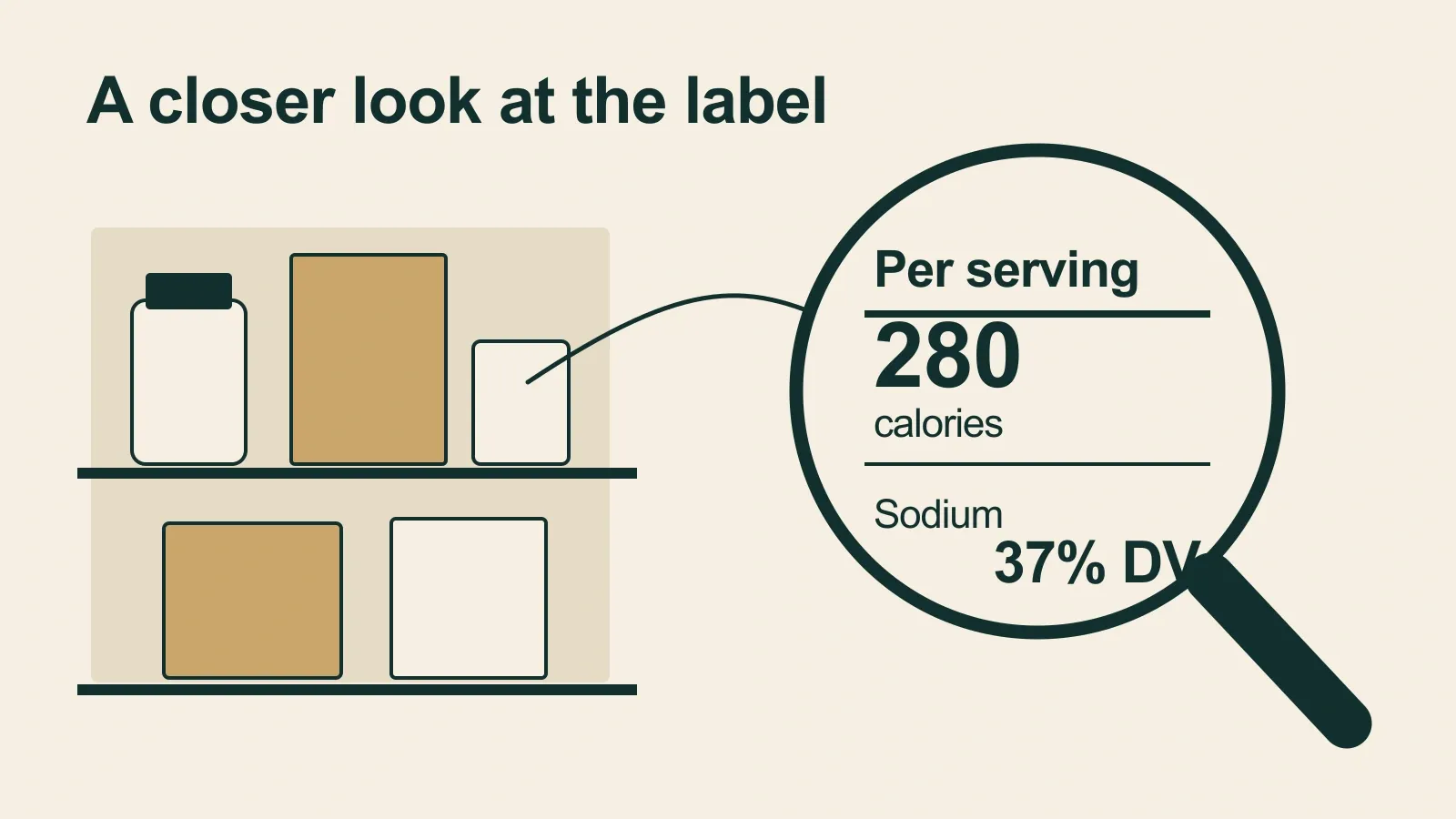
You turn over a package, find a column of numbers, and wonder which ones deserve your attention. You do not need to memorize every nutrient to make a useful comparison.
Learning how to read nutrition labels starts with a simple order: check the serving, find the nutrient that matters to your decision, then compare a similar food on the same basis. This guide uses US Nutrition Facts labels and FDA teaching examples and two actual soup labels. The examples explain the numbers; they are not meal recommendations or endorsements of products.
Try the steps at your kitchen table before your next shopping trip. Good light, reading glasses, or a magnified phone photo can make a small panel easier to examine without rushing.
1. Find the serving before reading the numbers
The serving size is the amount that the rest of the panel usually describes. Also look for servings per container: a package may hold several servings.
The FDA explains that serving size reflects what people typically eat, rather than what they should eat. Your portion is the amount you actually put on your plate. The two can differ.
Read the household measure and the weight together. “One slice” is helpful, but slices from different loaves can have different weights. A cup of one food also should not be treated as nutritionally equivalent to a cup of another food.
Before comparing two similar products, ask: Are both panels describing the same amount? If one gives values for one slice and another for two, adjust to a common amount first. Keep that amount visible while checking each nutrient.
2. Work through the FDA lasagna example
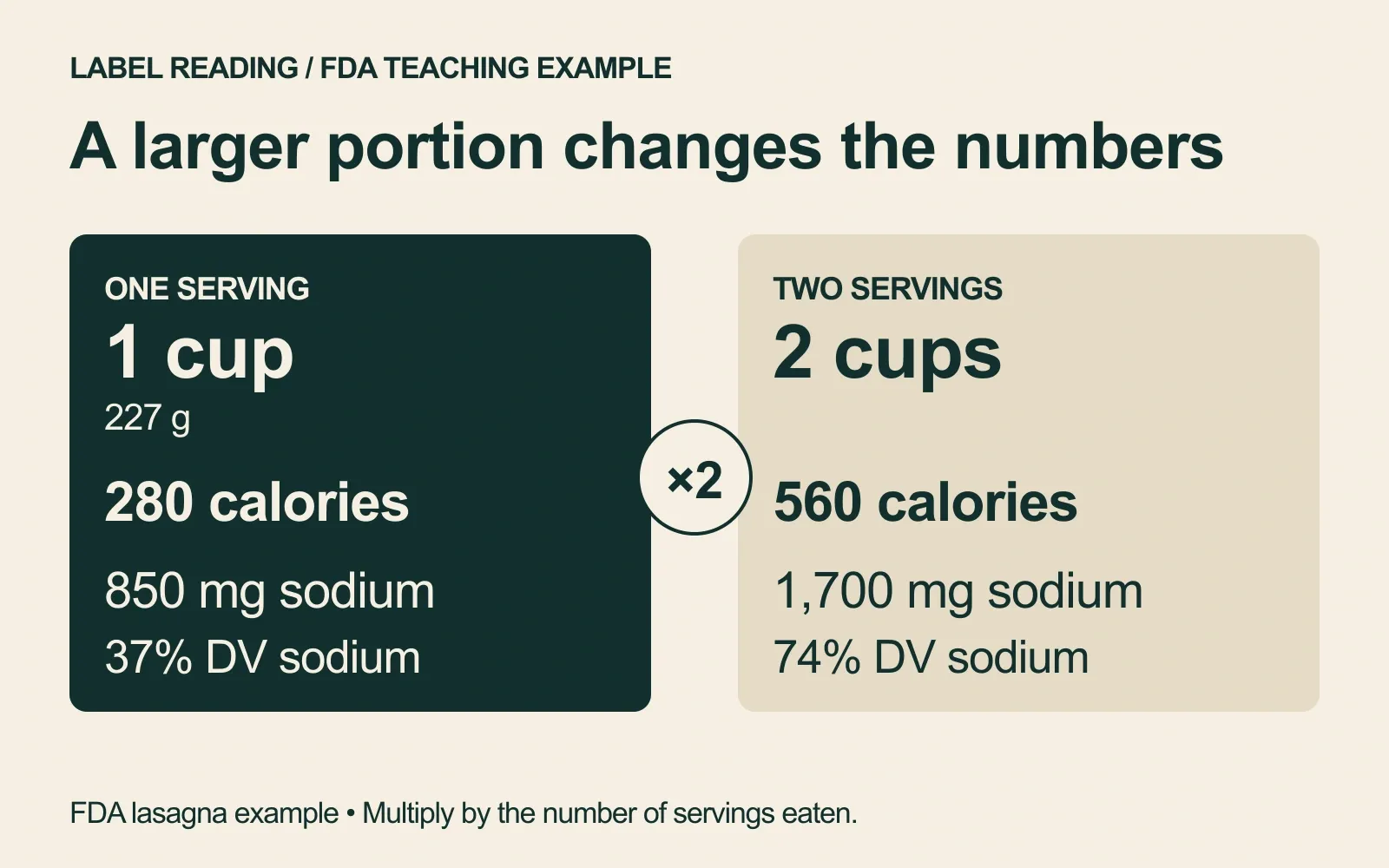
The FDA’s sample frozen-lasagna label lists one serving as 1 cup, or 227 grams. That serving provides 280 calories and 850 milligrams of sodium, shown as 37% Daily Value.
If you eat 2 cups, you have eaten two label servings. The FDA’s example then shows 560 calories and 1,700 milligrams of sodium, or 74% Daily Value. The package contains four servings, so the entire package is a different amount again.
The useful decision is not “Is lasagna allowed?” It is “Which amount does this panel describe, and how does that fit the meal I am planning?” The same check helps with soup, cereal, or a snack bag.
For an easy practice exercise, point to the serving line, then to sodium. Say the amount aloud. This makes it harder to mistake a per-serving number for a package total.
3. Use the percentage column as a quick comparison
The percentage Daily Value, or %DV, puts a nutrient amount into context against a daily reference. Each row stands on its own; you do not add the percentages down the column.
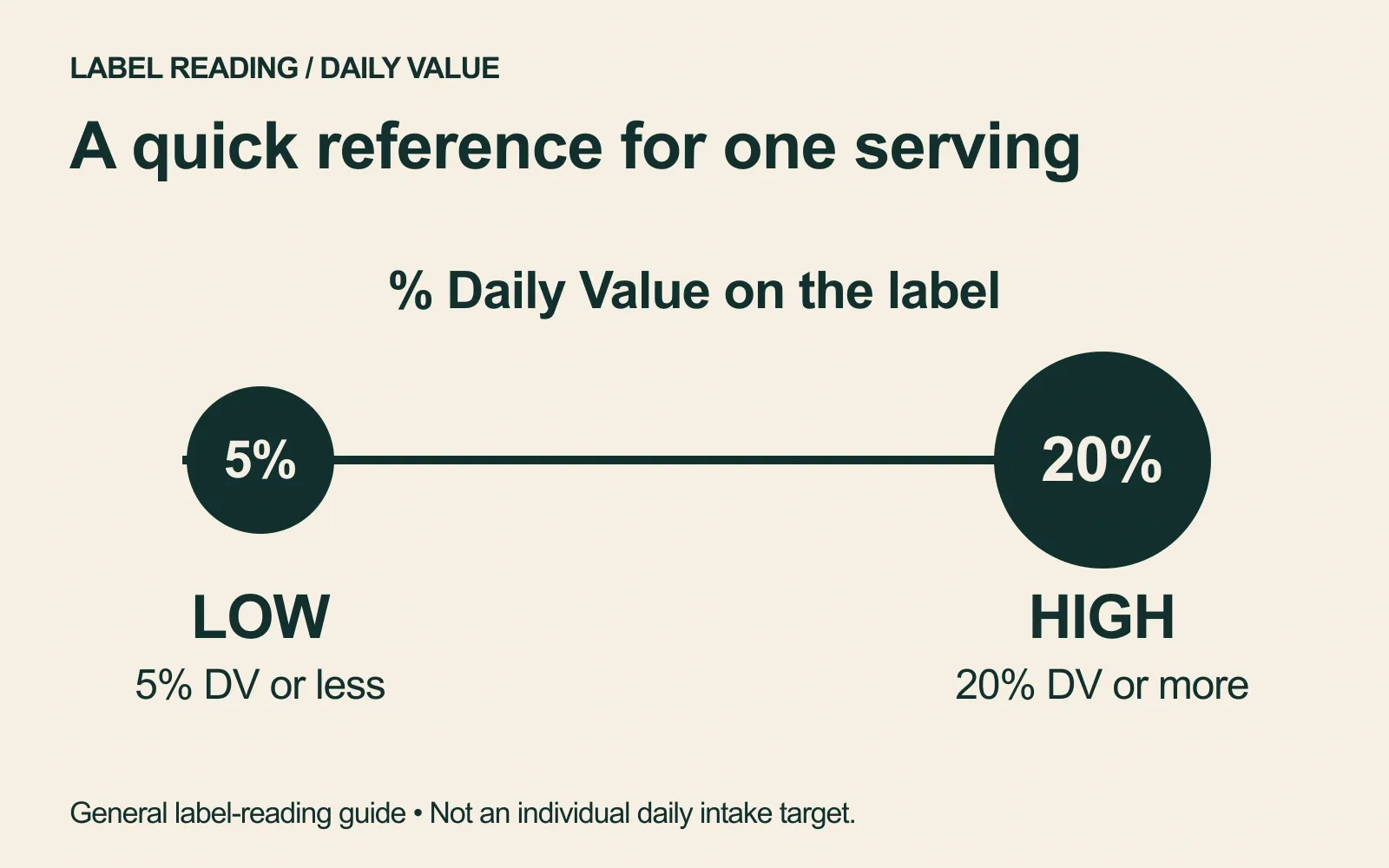
The FDA’s quick guide to low and high amounts is 5% DV or less for a low amount and 20% DV or more for a high amount, per serving. Between those points, compare the actual numbers.
For everyday comparisons, look for more fiber and less sodium, saturated fat, or added sugars when those are your priorities. A food can be high in one nutrient and low in another. It does not receive one overall score.
That is why the lowest-calorie package is not automatically your best choice. Consider what the food contributes, whether you enjoy it, and whether it works with the rest of your meal.
4. Read total sugars and added sugars together
A second FDA example addresses a different question. Its yogurt label excerpt shows 15 grams of total sugars and “Includes 7g Added Sugars.” The added sugars are already part of the total, so you do not add 15 and 7 together. The remaining 8 grams are naturally occurring sugars.
These are FDA’s official yogurt-example numbers for explaining the two lines, not the values for every yogurt. Check the container you buy.
To compare two similar yogurts, first match the serving amount, then read the added-sugars line on each. You can also consider protein, taste, and price. Comparing yogurt with lasagna would not answer which yogurt to choose; these examples teach two separate label-reading skills.
Compare two soup labels on the same basis
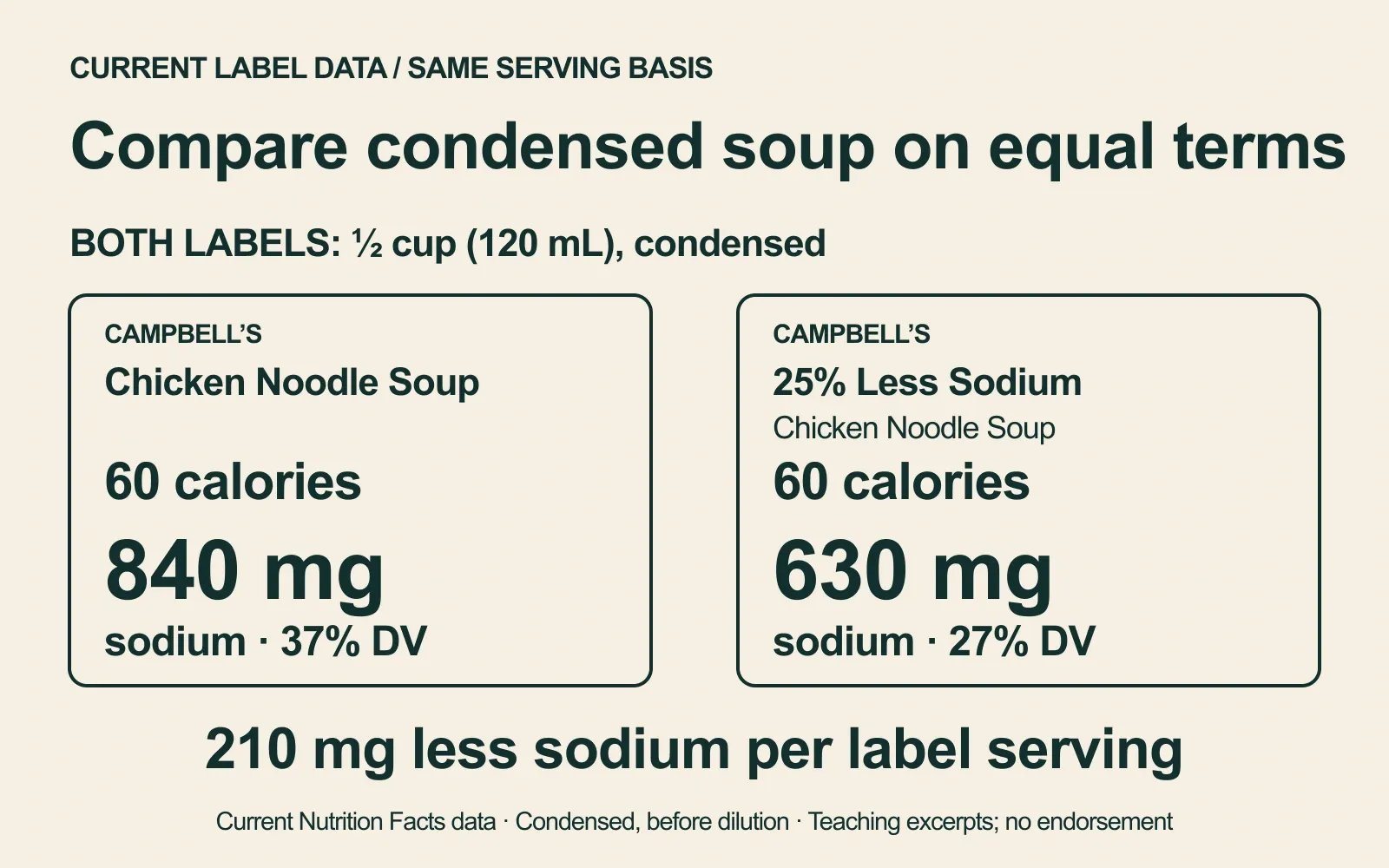
Here is a real same-category comparison. Campbell's Chicken Noodle Soup label lists 60 calories and 840 milligrams of sodium, or 37% DV, per ½ cup (120 mL) of condensed soup. Its 25% Less Sodium Chicken Noodle Soup label lists 60 calories and 630 milligrams of sodium, or 27% DV, for that same amount.
Because the serving amounts match, you can compare directly: 840 minus 630 is 210 milligrams less sodium per label serving. The calorie numbers are identical, so checking calories alone would miss this difference. Both sodium percentages are still above the FDA's 20% DV guide for a high amount per serving.
These figures describe condensed soup before dilution, not a finished bowl. Follow the package preparation directions and count how much condensed soup goes into your portion. This is a reading exercise, not a recommendation to buy either soup or a personal sodium target. Formulas can change; check the can you actually have.
5. Separate label references from your own needs
The 2,000-calorie reference on the panel is a general guide. The FDA’s label guide for older adults explains that calorie needs can be higher or lower. Being over 60 does not make the printed reference your personal prescription.
Likewise, a %DV is a comparison tool, not an instruction to reach exactly 100% of every nutrient with packaged foods. If your care team has given you a sodium, potassium, carbohydrate, or other eating plan, use that plan when interpreting the panel.
For someone with a small appetite or unintentional weight loss, a hunt for the lowest number on every row can miss the more important question: how to get enough nourishment. Bring a photo of a familiar label to your clinician or registered dietitian if you need help applying an individual plan.
6. Give each part of the package its own job
The ingredient list tells you what went into a food. Ingredients generally appear in order from greater to smaller amounts by weight. The Nutrition Facts panel tells you the amounts of listed nutrients in a serving. Front-of-package words are a reason to investigate, rather than a replacement for either list.
Bread is a useful next step: our whole grain vs. multigrain bread guide shows how to examine grain wording. For vegetables, the frozen vs. fresh vegetables guide applies label comparisons to sauces, preparation, and everyday kitchen choices.
At the store, choose two foods you would realistically buy. Match their serving amounts, compare one or two relevant nutrients, then consider cost and taste. A small, repeatable routine is more useful than trying to judge the entire aisle at once.
Frequently asked questions
Use these answers when a particular line on the label raises another question.
Do I need to calculate percentages to use %DV?
No. The percentage column already expresses the nutrient amount as a share of its daily reference. Start with the serving amount, then read the percentage for the nutrient you want to compare.
How are added sugars different from total sugars?
Total sugars includes naturally occurring sugars and any added sugars. The added-sugars line identifies the added part. “Includes” means it is already counted in the total, not an extra amount to add.
Why are added sugars listed separately?
The separate line helps you identify sugars added during processing when comparing foods. It gives information that the total-sugars number alone cannot provide, especially for foods that also contain naturally occurring sugars.
Why does protein sometimes have no %DV?
For many foods, protein is listed without a percentage Daily Value. Use the grams to compare equal serving amounts. A blank percentage does not mean the food contains no protein.
How many servings am I eating or drinking?
Compare your amount with the serving amount printed at the top. Twice the serving means twice the listed calories and nutrient amounts. If the panel includes a whole-package column, read its heading carefully before using it.
Keep exploring.
Read · Food Facts
Canned Beans vs. Dried Beans: Nutrition, Cost and Cooking Effort
Compare canned beans vs dried beans by cooked portions, sodium, usable cost and cooking effort, with practical kidney-bean and leftover safety checks.
Read article
Read · Food Facts
Dairy Milk vs. Almond Milk After 60: What to Compare on the Label
Compare milk vs almond milk using actual US labels. Check protein, calcium, vitamin D, added sugars and allergens before choosing your everyday drink.
Read article