
Reading
Whole Grain vs. Multigrain: How to Choose Bread After 60
Check the grain ingredients first, then compare fiber and sodium for the amount of bread you actually eat.
Turn the loaf over before choosing
One loaf says “multigrain.” Another says “whole wheat.” Both may look brown, and both may have seeds on top. The front of the bag does not give you enough information to choose between them.
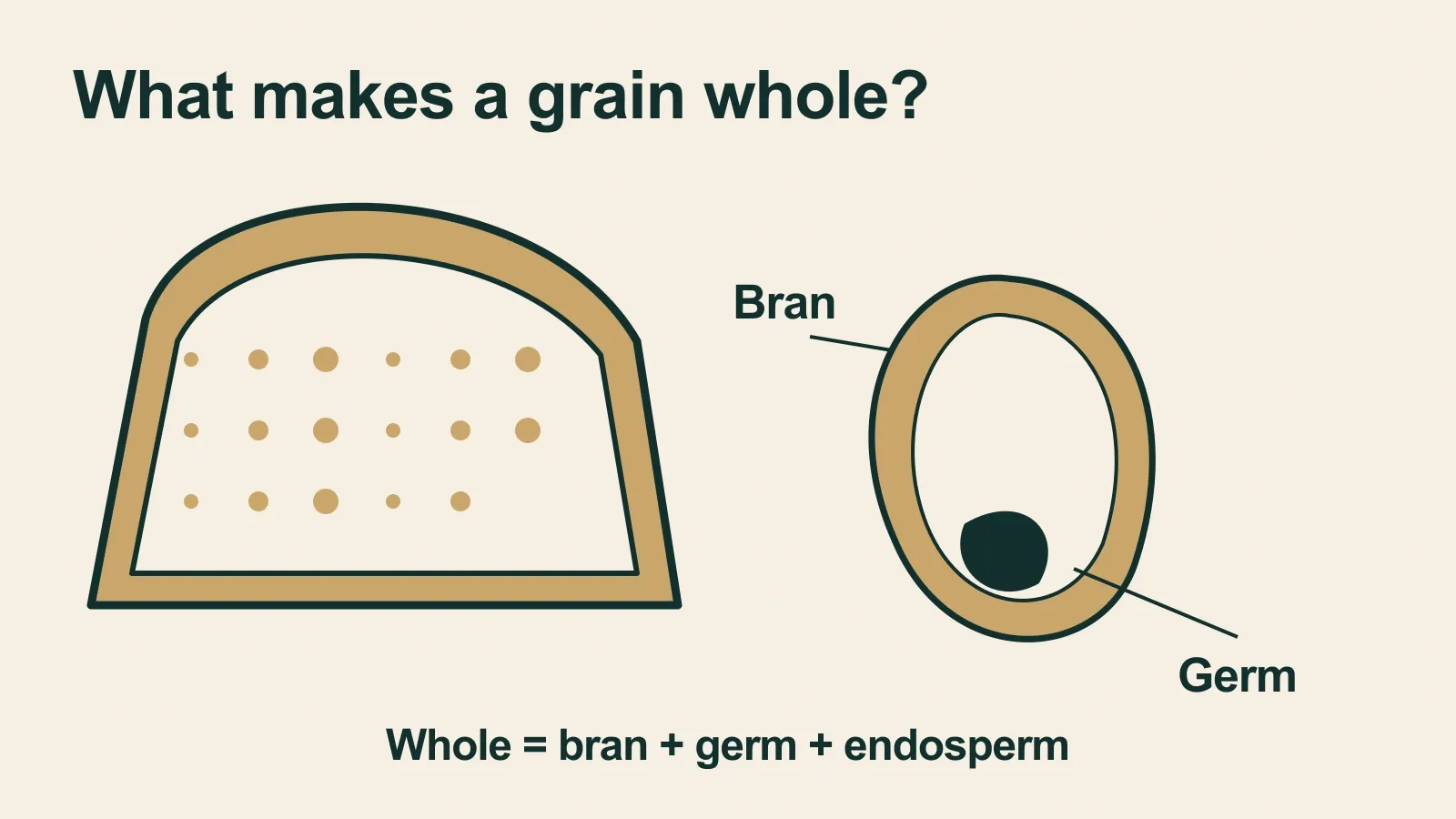
For whole grain vs. multigrain bread, the key distinction is straightforward: whole grain describes what remains of the grain kernel. Multigrain describes a mixture of grain types. A loaf can be both.
The useful next step is to check the ingredients, then compare fiber and sodium for the amount of bread you expect to eat. You can do this without finding an expensive specialty loaf or giving up bread you enjoy.
Whole grain and multigrain answer different questions
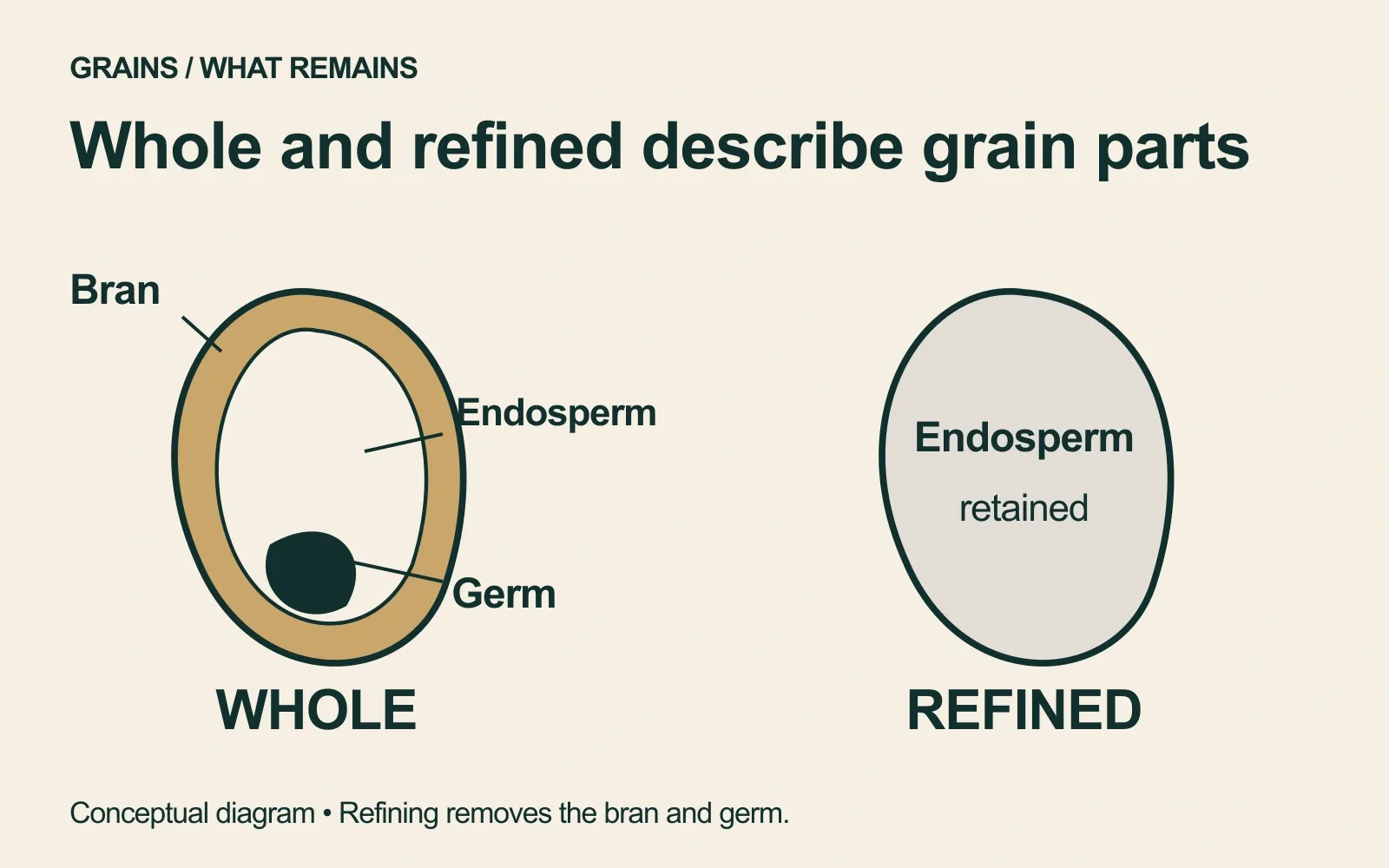
A whole grain contains the bran, germ, and endosperm, the three main parts of the kernel, in their original proportions. Whole wheat is a whole grain made from wheat. Whole-grain bread can also use other grains.
Multigrain means more than one type of grain; those grains may be whole, refined, or a mixture. The number of grains does not tell you which parts remain.
Refining removes the bran and germ. Enrichment adds back certain vitamins and iron, but does not restore the fiber removed during milling. Enriched flour and whole-wheat flour therefore do not mean the same thing.
Brown color and a seeded surface can catch your eye, but neither proves a loaf is whole grain. Read the small print before paying extra for the impression created by the package.
Read these ingredient clues in order
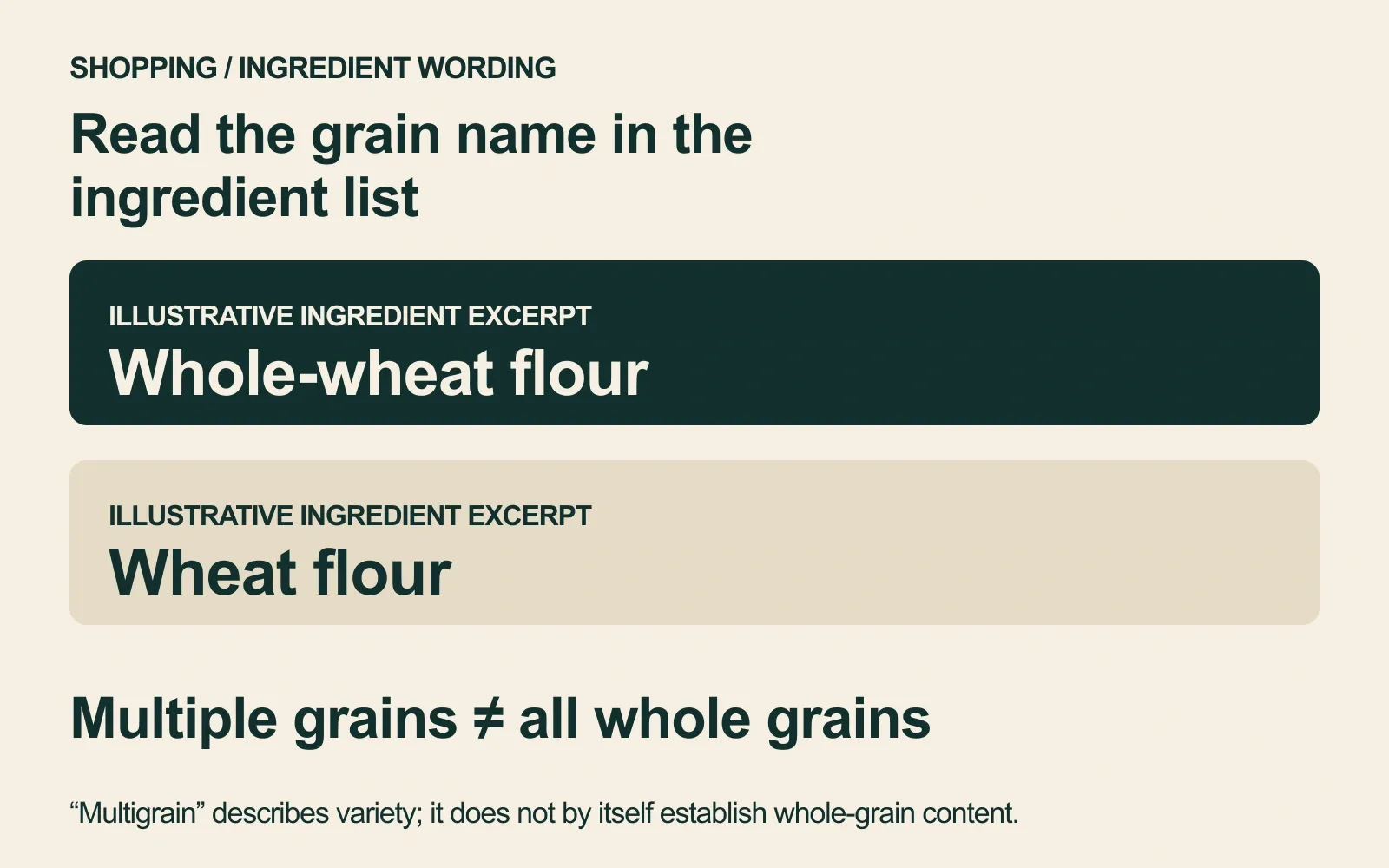
First find the ingredient list. The FDA explains that ingredients are listed by weight, from greater to smaller amounts. Look for a clearly named whole grain, such as whole-wheat flour, early in that list.
Here are simplified teaching excerpts, not actual product labels or complete recipes:
Example A: “Whole-wheat flour, water, whole oats …” Both named grains are whole grains. This bread could also be described as multigrain.
Example B: “Enriched wheat flour, water, whole-wheat flour, rye flour …” This includes some whole wheat, but the first ingredient is refined flour. The list does not establish that every grain ingredient is whole grain.
Example C: “Wheat flour, water, wheat bran …” Neither ordinary wheat flour nor separately added bran makes this equivalent to whole-wheat flour.
These excerpts show what you can infer, and where to stop. Ingredient order alone does not give you an exact whole-grain percentage. If you want a loaf made with all whole-grain ingredients, look for a clear 100% whole-grain statement and check the grain ingredients for consistency. Ask the manufacturer if the wording is unclear.
Compare fiber and sodium on the same basis
Next turn to Nutrition Facts. The FDA recommends matching serving sizes before comparing nutrients. Check both the slice count and the weight; one thick slice can differ substantially from one thin slice.
For two similar loaves, write down the dietary fiber and sodium for the amount you plan to use. If one panel describes one slice and the other describes two, adjust the numbers before comparing. Read added sugars as another piece of information if that matters to your choice.
Higher fiber does not automatically mean lower sodium, and a whole-grain claim does not settle either question. Choose the combination that works for your eating plan, taste, and budget.
Our Nutrition Facts label guide explains serving amounts and percentages step by step. If you have been given an individual sodium or carbohydrate plan, use that plan instead of treating a package percentage as your personal target.
Choose bread you can use in ordinary meals
Think about the meals you already make: toast with an egg, a sandwich, or bread alongside soup. The loaf that fits those meals and your budget is a practical place to start.
A whole-grain choice does not have to be dense or covered with seeds. Buy a smaller loaf while trying a new texture. Notice whether you enjoy it fresh, toasted, or with your usual sandwich filling before buying more.
For a prescribed food texture, allergy restriction, or medical eating plan, follow your care team’s advice. If you have celiac disease, ordinary whole-wheat bread is not a suitable substitute for gluten-free bread. Grain claims and gluten-free claims answer separate questions.
Frequently asked questions
Check these details when grain wording leaves you uncertain about a loaf.
Does whole grain mean the same as 100% whole grain?
Do not assume the phrases convey identical information. The FDA’s draft whole-grain guidance distinguishes them and recommends that 100% whole-grain products contain only whole-grain grain ingredients. Check the ingredient list as well as the front claim; that statement does not mean every ingredient, including water or yeast, is a grain.
Do rolled oats count as a whole grain?
Yes, when oats are simply flattened or steamed and flattened without removing the bran, germ, or endosperm. Their changed shape does not itself make them refined. For bread containing oats, check the other grain ingredients too.
What is graham flour?
Graham flour is another name for whole-wheat flour. It identifies a whole-grain ingredient in a bread's ingredient list. Check the other grain ingredients too; one whole-grain ingredient does not establish that every grain in the loaf is whole.
Does whole grain mean gluten-free?
No. Wheat, barley and rye contain gluten, so ordinary whole-wheat bread is not gluten-free. For celiac disease, look for a suitable gluten-free label and follow your care team's plan. If you suspect celiac disease, talk with your doctor before avoiding gluten because doing so can affect testing.
Keep exploring.
Read · Food Facts
Canned Beans vs. Dried Beans: Nutrition, Cost and Cooking Effort
Compare canned beans vs dried beans by cooked portions, sodium, usable cost and cooking effort, with practical kidney-bean and leftover safety checks.
Read article
Read · Food Facts
Dairy Milk vs. Almond Milk After 60: What to Compare on the Label
Compare milk vs almond milk using actual US labels. Check protein, calcium, vitamin D, added sugars and allergens before choosing your everyday drink.
Read article