
Reading
Dairy Milk vs. Almond Milk After 60: What to Compare on the Label
Compare milk vs almond milk using actual US labels. Check protein, calcium, vitamin D, added sugars and allergens before choosing your everyday drink.

Start with the drink you actually buy
Milk vs. almond milk is easiest to compare with two cartons turned around. Their similar color does not tell you how much protein, calcium, vitamin D or added sugar they contain.
For readers after 60, the useful question is what a drink contributes to meals you enjoy and can tolerate. Choosing a lower-calorie drink is not automatically the right goal, especially if getting enough food is difficult.
The comparison below uses two specific US manufacturer website labels checked November 6, 2026. They are examples for reading labels, not endorsements, category averages or a personalized diet plan. Check the carton in your hand because formulas can change.
Milk vs. almond milk: match the serving first
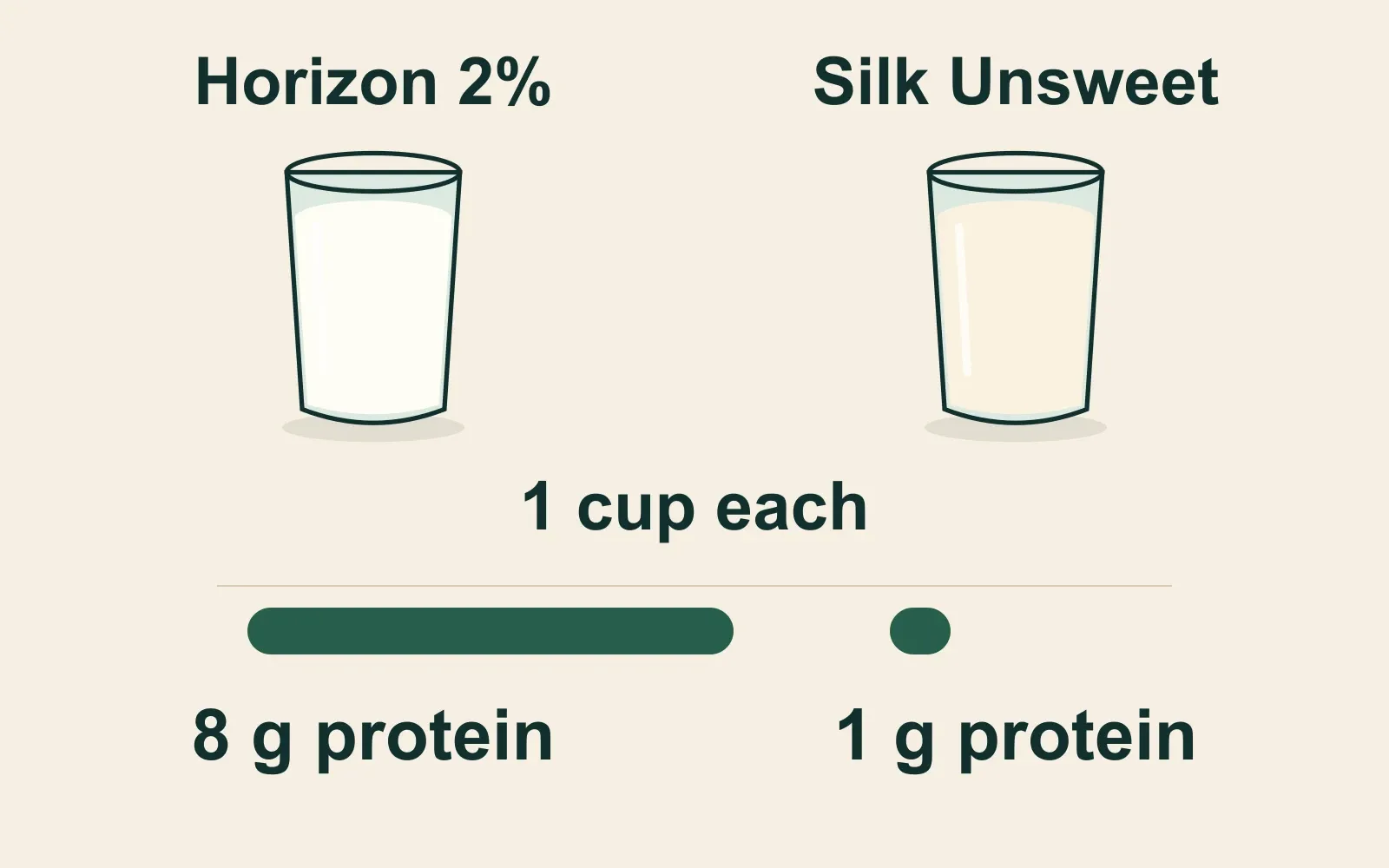
Both selected products list a serving of 1 cup, or 240 mL. That common amount lets us compare the printed nutrient amounts directly.
Horizon Organic 2% Reduced Fat Milk lists 8 g protein, 300 mg calcium and 2.5 mcg vitamin D per cup. Silk Unsweet Almondmilk lists 1 g protein, 470 mg calcium and 4 mcg vitamin D per cup.
These two labels illustrate why there is no single winning number. The dairy product supplies more protein in this comparison; the fortified almond beverage lists more calcium and vitamin D. Neither result describes every dairy or almond product.
The FDA explains that plant-based drinks vary by source and added ingredients. Use the label on the actual version you buy, including whether it is sweetened, unsweetened, flavored or fortified.
Keep protein and fortification separate
A calcium number does not tell you the protein content. Read those rows independently instead of using “contains calcium” as shorthand for nutritional equivalence.
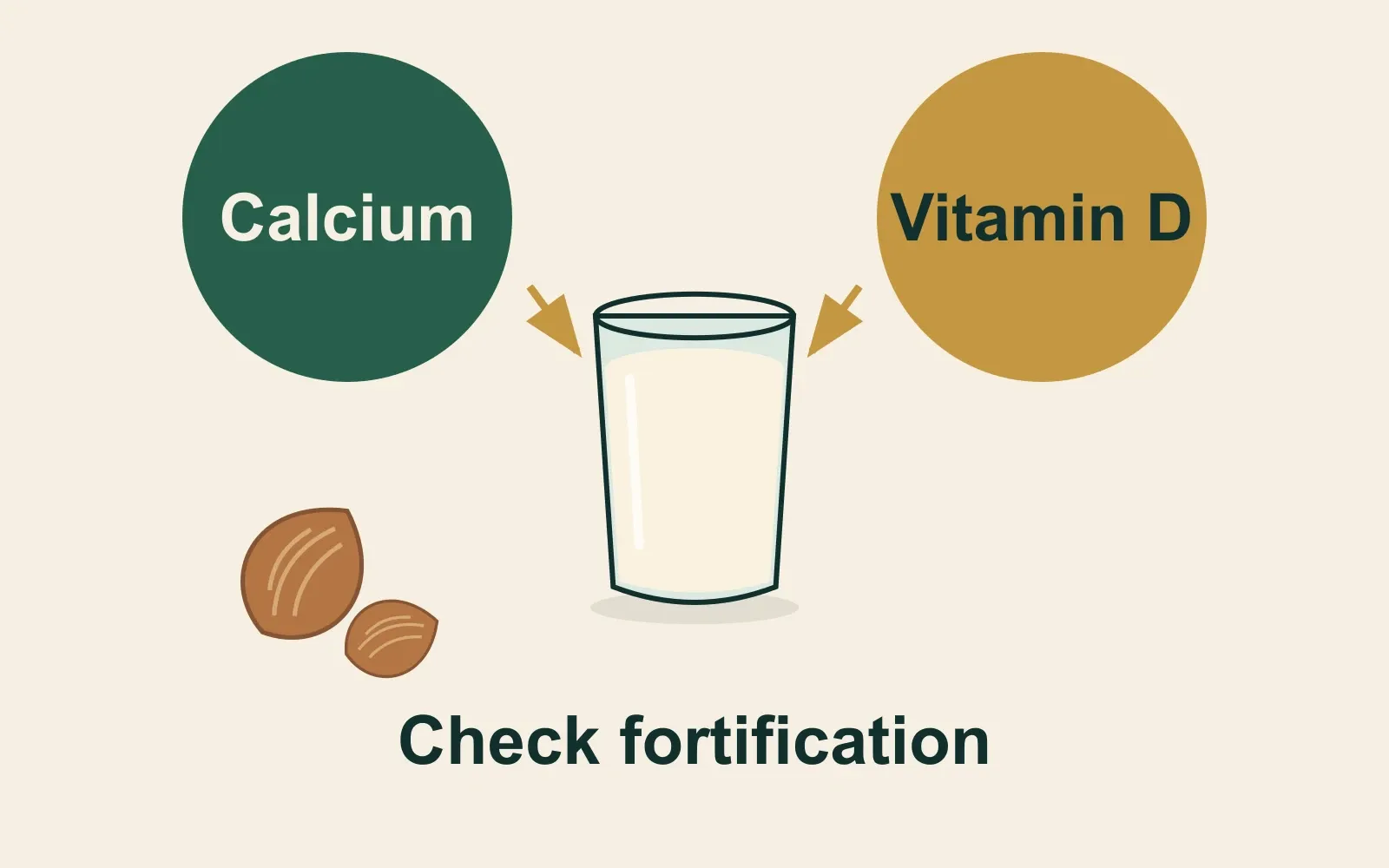
Fortification means nutrients have been added. The ingredient lists for these examples identify added vitamins or minerals. That can make a beverage a useful source of particular nutrients, but it does not make every other nutrient match dairy milk.
The NIH calcium fact sheet identifies dairy foods and calcium-fortified beverages among food sources. It also explains that calcium absorption varies among foods. A printed amount is useful information, not a measurement of exactly how much your body will absorb from that glass.
Read protein in grams, calcium in milligrams and vitamin D in micrograms. If a label is difficult to read, take a clear photo and enlarge it. Our Nutrition Facts walkthrough shows how the amount and percentage columns work.
Read total sugars and added sugars together
The selected Horizon label lists 12 g total sugars and 0 g added sugars per cup. The selected Silk Unsweet label lists 0 g total sugars and 0 g added sugars. Milk naturally contains lactose, a sugar; a total-sugars number does not by itself mean sugar was added.
The FDA’s added-sugars explanation distinguishes naturally occurring sugars from those added during processing. Added sugars are already included in total sugars, so do not add the two lines together.
If you change from an unsweetened version to a sweetened or flavored version, check again. A front label may help identify the variety, but the nutrient panel and ingredients provide the detail. Neither these sugar values nor a product’s name tells you what portion fits an individual diabetes eating plan.
Lactose intolerance and milk allergy are different
Lactose intolerance concerns digestion of lactose. A milk allergy involves the immune system. NIDDK explains the difference and notes that people with lactose intolerance vary in the amount they can tolerate.
That distinction matters at the store. Lactose-free dairy milk still contains milk proteins; removing or breaking down lactose does not make it suitable for a milk allergy. Likewise, almond milk is not an appropriate choice for someone allergic to almonds. The selected labels identify milk and almond, respectively.
Do not use a food comparison article to diagnose symptoms or test a suspected allergy. If you are choosing around an allergy, check the full ingredient and allergen information on each package and follow your clinician’s guidance. A product that works for someone else may not suit you.
Make the comparison fit your usual meals
Consider how you use the drink. A splash in coffee and a full glass with breakfast contribute different amounts. If you regularly replace a full cup of one drink with another, look at what changes across several relevant nutrients rather than focusing on one front-label claim.
The FDA recommends checking protein, calcium, vitamin D and added sugar when comparing milk and plant-based alternatives. You can also examine saturated fat and any nutrients your care team has asked you to monitor. This article does not set a personal target for any of them.
Taste, cost, refrigeration, package size and whether you finish the container belong in the decision. A drink you dislike or repeatedly throw away is hard to fit into an ordinary routine.
If a replacement changes an important part of your diet, a registered dietitian can help you consider the rest of your meals. This is especially useful with a prescribed eating plan or difficulty maintaining adequate intake.
A repeatable carton check
Choose two versions you would actually buy. Match the serving size, read protein, then check calcium and vitamin D. Read total and added sugars together. Finally, check the ingredients and allergens and consider how much you normally use.
That routine keeps the decision specific. “Almond” describes the source, “unsweetened” describes a product characteristic, and a calcium claim describes one nutrient. None tells you everything about the drink.
Keep the carton or a photo of its label if you want help comparing options. You do not need a universal winner to make a sensible choice for your own kitchen.
Frequently asked questions
Use these answers to clear up a particular label or ingredient question.
Is almond milk nutritionally the same as dairy milk?
Not automatically. The FDA describes meaningful nutrient differences among plant-based drinks and dairy milk. Match serving amounts and compare protein, fortification and added sugars on the specific products.
Does more calcium mean more protein?
No. In the selected Silk Unsweet label, calcium and protein are separate entries. A higher amount of one nutrient does not establish a higher amount of another. Read each relevant row.
Does milk’s total sugar mean added sugar?
No. FDA distinguishes naturally occurring and added sugars. Read the added-sugars line separately; it is already included in total sugars. Check flavored products rather than assuming they match plain milk.
Is lactose-free milk suitable for a milk allergy?
Lactose intolerance and milk allergy are different conditions. Lactose-free dairy still contains milk proteins. Follow the allergy plan from your care team and check the package, rather than substituting based on the words lactose-free.
Keep exploring.

Read · Food Facts
Canned Beans vs. Dried Beans: Nutrition, Cost and Cooking Effort
Compare canned beans vs dried beans by cooked portions, sodium, usable cost and cooking effort, with practical kidney-bean and leftover safety checks.
Read article
Read · Food Facts
How to Read a Nutrition Facts Label: A Clear Guide After 60
Read serving size and % Daily Value, then compare two actual soup labels on the same basis.
Read article