
Reading
Frozen vs. Fresh Vegetables: Which Fits Your Kitchen After 60?
Both can be nutritious choices. Compare the labels, the preparation and the food you will actually use.
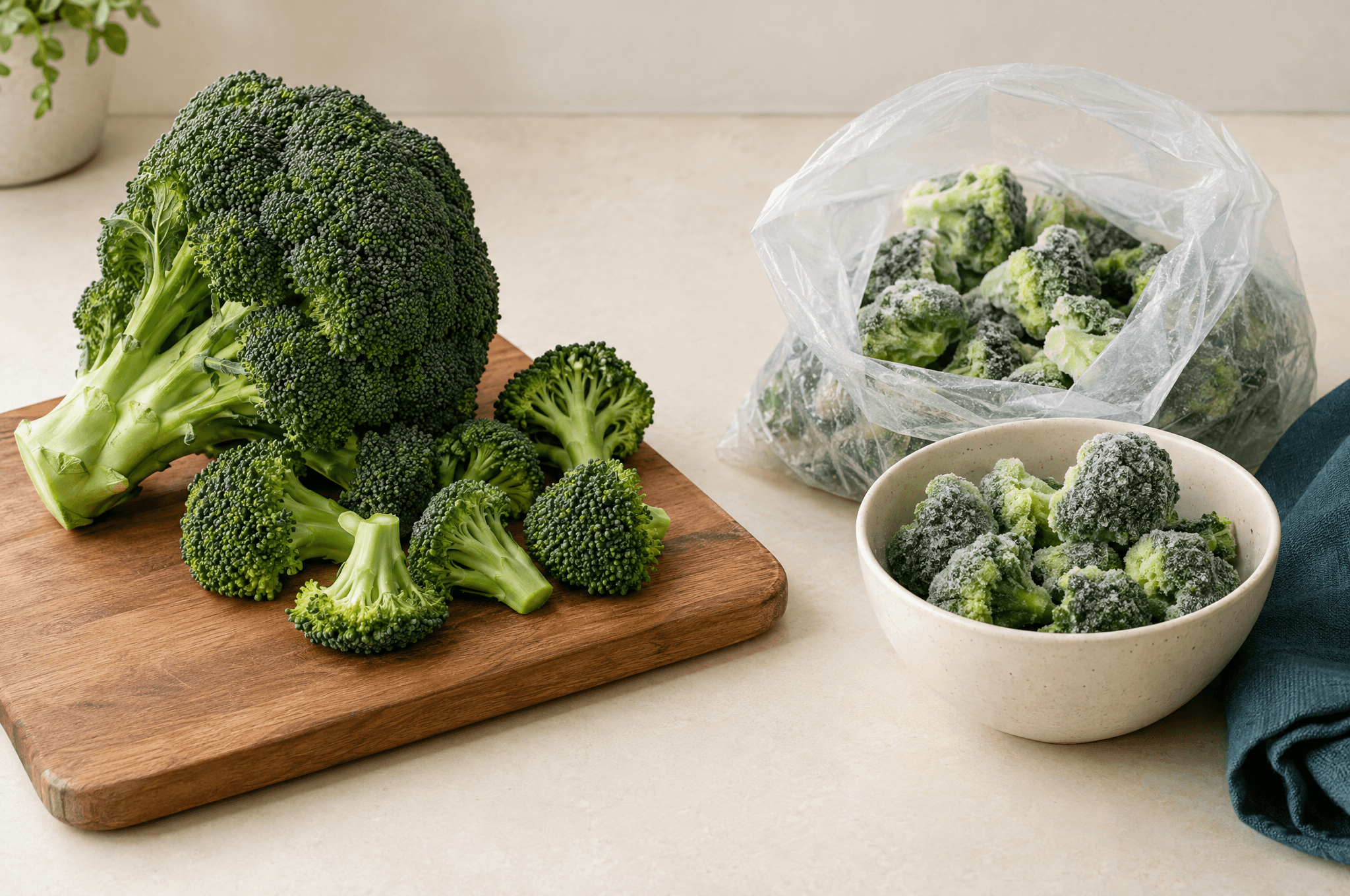
Both can fit your meals
A bag of frozen broccoli can belong beside a fresh head of broccoli in a well-stocked kitchen. Choosing frozen vegetables is a practical way to keep vegetables available between shopping trips. Fresh vegetables also have a place, especially when you enjoy their texture and have a plan to use them.
You do not need to declare one form the winner. The American Heart Association and USDA both include fresh and frozen produce among useful choices. The more helpful question is which option fits this meal, your budget and the amount of preparation you want to do.
What the nutrition research can tell us
Frozen does not automatically mean nutritionally inferior. A 2015 laboratory study compared vitamin retention in eight fruits and vegetables during refrigerated and frozen storage. Overall, the frozen samples had similar or sometimes higher levels of the vitamins measured. Some foods had lower beta-carotene after freezing, however. Results depended on the food and nutrient being measured.
That is a useful correction to an all-or-nothing claim about frozen vegetables. It is also a limited finding: this study measured food composition, not health outcomes in older adults. It cannot show that choosing frozen broccoli prevents disease, builds muscle or helps someone live longer.
Compare the vegetable with the vegetable
Plain frozen vegetables and vegetables in a cheese or seasoned sauce are different purchases. Look at the ingredient list, then compare sodium on the Nutrition Facts labels. The American Heart Association notes that sauces and seasonings can add sodium. A convenient prepared option may still fit your meals, but compare the actual products rather than assuming every frozen bag is alike.
Make the comparison fair in the other direction, too. If you usually add a salty sauce to fresh broccoli, include that sauce in your decision. The word “fresh” describes the form you bought; it does not describe everything that ends up on the plate.
Choose a package you can open, portion and store comfortably. A smaller bag that works in your kitchen may be more useful than a large bargain bag that is awkward to handle.
Let the meal guide the choice
Start with what you intend to cook. For a meal where you want a particular crisp texture, you may prefer fresh vegetables. For a soup, sauce or casserole, frozen vegetables can be an easy option; USDA specifically suggests those uses. Follow the package instructions for the product you have rather than assuming a frozen ingredient cooks exactly like a fresh one.
For example, you might plan a fresh vegetable side for an early-week dinner and keep a plain frozen mix for a later soup. Adjust it to the foods you enjoy and the meals you already make.
Convenience deserves a place in this decision. If chopping and trimming feel like too much work on a particular day, a ready-to-cook option can make the meal easier to prepare.
Compare cost per portion you will use
There is no reliable rule that one form is always cheaper. Prices depend on the store, season, package and vegetable. USDA recommends seasonal purchases and planning around what is already in the kitchen. It also encourages a mix of fresh, frozen and canned choices to help limit waste.
At the store, compare the unit prices, then think about the usable amount. A whole fresh vegetable may need trimming. A frozen bag may let you take out only the amount you want. Neither advantage matters if you dislike the food or cannot store it properly.
If you want a simple household comparison, keep the receipts and note how many portions you actually used. Include anything discarded. This gives you an answer for your kitchen without relying on an advertised saving or an invented national price.
Keep the safety steps
Fresh vegetables still need careful handling. FDA advises washing produce under running water before preparation, keeping it separate from raw meat and cleaning the utensils and surfaces used for those foods. Do not use soap or household detergent on vegetables. Washing reduces contamination; it does not remove every possible germ.
Keep perishable fresh produce and pre-cut vegetables refrigerated. FDA recommends a refrigerator temperature of 40°F or below, checked with an appliance thermometer. Keep frozen foods frozen and follow their storage and cooking instructions.
Older adults can be more vulnerable to foodborne illness. Treat safe handling as part of choosing either form, rather than a reason to fear vegetables.
Build a small, workable routine
Before shopping, look in the refrigerator and freezer. Decide which fresh vegetables already need a place in your next meals. Then buy a realistic amount of fresh produce and keep a frozen option for the days between trips. USDA suggests using fresh items first and maintaining freezer and pantry choices for later.
You might begin with one vegetable you already like. Try the fresh and plain frozen versions in meals suited to each, and notice the preparation, taste, cleanup and waste.
If your care team has given you a specific eating plan, keep using that plan when choosing products and portions. A general comparison cannot replace advice tailored to your health needs.
Keep exploring.
Read · Food Facts
Canned Beans vs. Dried Beans: Nutrition, Cost and Cooking Effort
Compare canned beans vs dried beans by cooked portions, sodium, usable cost and cooking effort, with practical kidney-bean and leftover safety checks.
Read article
Read · Food Facts
Dairy Milk vs. Almond Milk After 60: What to Compare on the Label
Compare milk vs almond milk using actual US labels. Check protein, calcium, vitamin D, added sugars and allergens before choosing your everyday drink.
Read article