
Reading
Magnesium-Rich Foods After 60: Everyday Ways to Add Variety
Compare magnesium in portions of beans, greens, whole grains, nuts and seeds you can actually use in meals.
Start with foods you already eat
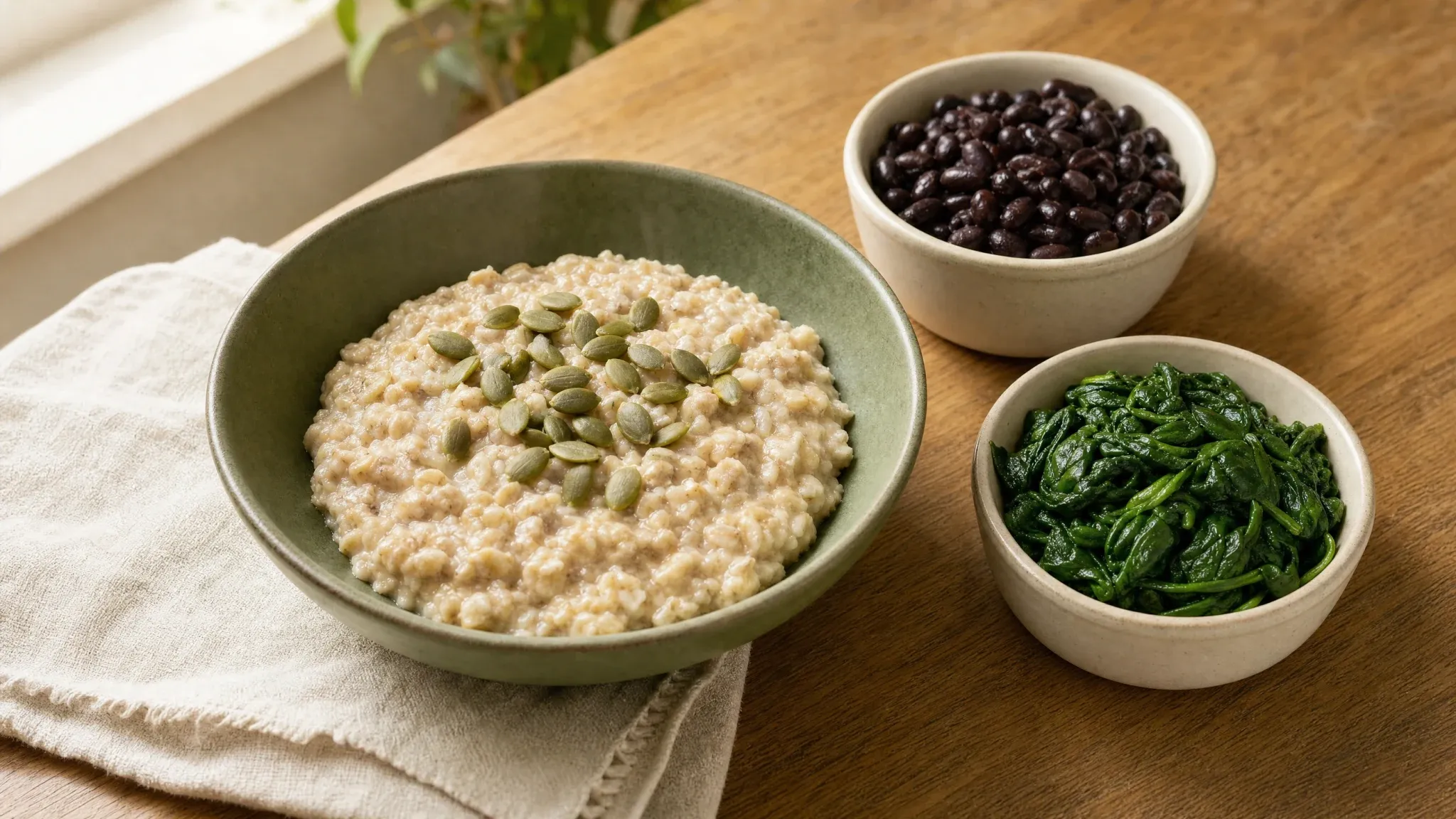
Pumpkin seeds, black beans and cooked spinach are three useful magnesium sources. They also fit very different meals. If you already make a bowl of oatmeal, try a seed topping. If there’s soup in the fridge, a spoonful of beans or cooked greens may be easier to use than buying something new.
Magnesium helps the body’s muscles and nerves work and plays a part in making bone and protein. The NIH Office of Dietary Supplements lists legumes, nuts, seeds, whole grains and leafy greens as common food sources. You can start with two or three choices that fit your taste, budget and usual portions.
Compare ordinary portions
These amounts come from the NIH magnesium food table. They are reference values for the preparation shown. The amount in a brand or recipe can vary. Read the portion as carefully as the number.
Roasted pumpkin seeds, 1 ounce: 156 milligrams.
Dry-roasted almonds, 1 ounce: 80 milligrams.
Boiled spinach, ½ cup: 78 milligrams.
Cooked black beans, ½ cup: 60 milligrams.
Cooked shelled edamame, ½ cup: 50 milligrams.
Smooth peanut butter, 2 tablespoons: 49 milligrams.
Cooked brown rice, ½ cup: 42 milligrams.
Instant oatmeal, 1 packet: 36 milligrams.
Banana, 1 medium: 32 milligrams.
A sprinkle of pumpkin seeds will supply less than the listed ounce. For a measured example, a quarter ounce would provide about 39 milligrams based on the reference value. If you rarely use seeds, a half cup of beans or a serving of cooked greens may be easier to build into dinner. The spinach number is for half a cup after boiling. If you’re trying to work a few of these into meals, pick one or two amounts that feel realistic. You don’t need to measure every meal to use the list.
Work them into breakfast, lunch and dinner
Breakfast. Have oatmeal with pumpkin seeds if you like the crunch. If you prefer a softer bowl and tolerate peanuts, stir in a little smooth peanut butter. A sliced banana is another option. The seed and nut amounts in the food table are for measured portions, so treat a small topping as an addition to the bowl.
Lunch. Add cooked black beans to a soup you already enjoy or mash them into a sandwich spread. Keep a small can for days when you want a short prep time. Our canned vs. dried beans guide shows how to compare cooked portions and sodium without having to cook a full batch.
Dinner. Try cooked spinach as a side or mix it into a dish you already make. Brown rice is another pantry option. If frozen spinach is easier to keep on hand, our frozen vs. fresh vegetables guide covers package differences and preparation. The NIH entry in this guide refers specifically to boiled spinach. Use it as a reference rather than assuming every spinach product has the same amount.
If you find nuts or seeds hard to chew, try softer choices such as cooked beans, oatmeal or well-cooked greens. Follow any swallowing or food-texture instructions you already have. Choose foods you tolerate and skip any ingredient you’re allergic to.
Read fortified food labels where it helps
Some breakfast cereals have magnesium added. If the package lists magnesium, check its serving size, milligrams or percent Daily Value alongside the other label details you care about. The NIH food table uses a general labeling Daily Value of 420 milligrams. A cereal listing 10% Daily Value would provide about 42 milligrams in its labeled serving.
The Daily Value is a tool for comparing products. The NIH intake reference for adults 51 and older lists 420 milligrams a day for men and 320 milligrams for women. These are population references. Your individual plan may differ. Use our Nutrition Facts label guide for a refresher on serving size and percentages.
Fit the choices to your care plan
If you have chronic kidney disease, ask your kidney care team how beans, greens, nuts and seeds fit your plan before making large changes. NIDDK’s kidney nutrition guide explains why the amounts of potassium and phosphorus you need to manage vary with kidney function and blood tests.
If you are concerned about a low intake or symptoms, share a short list of your usual meals and supplements with your clinician or dietitian. Food lists can help you describe what you eat. Your care team can help decide whether you need any further assessment.
Pick one familiar meal for this week and add one food from the list. If the change works for you, keep it in your rotation and try another when you’re ready.
Frequently asked questions
Use the portions above as a starting point for choosing foods.
Which everyday foods provide magnesium?
NIH’s consumer magnesium guide lists beans, whole grains, leafy greens, nuts and seeds. Cooked black beans, brown rice and cooked spinach are examples to try in everyday meals. The useful portion is the one you’ll actually eat.
How much magnesium do adults over 60 need?
The NIH reference for adults 51 and older lists 420 milligrams daily for men and 320 milligrams for women. Ask your care team if a condition or existing nutrition plan affects how you should use those numbers.
Can magnesium from food be harmful?
NIH explains that healthy kidneys remove excess magnesium from food. Supplemental magnesium is a separate consideration. If you have kidney disease or a prescribed eating plan, discuss which foods and portions suit you.
Should I take magnesium if I worry I am not getting enough?
Start by telling your clinician or dietitian what you usually eat and which supplements or medicines you take. The NIH magnesium guide discusses intake and medication interactions. Get individual advice before adding a supplement.