
Reading
Canned Salmon vs. Tuna: Protein, Bones, Sodium and Mercury
Both can make a quick meal. Compare the fish species, drained portion and label before choosing a can.
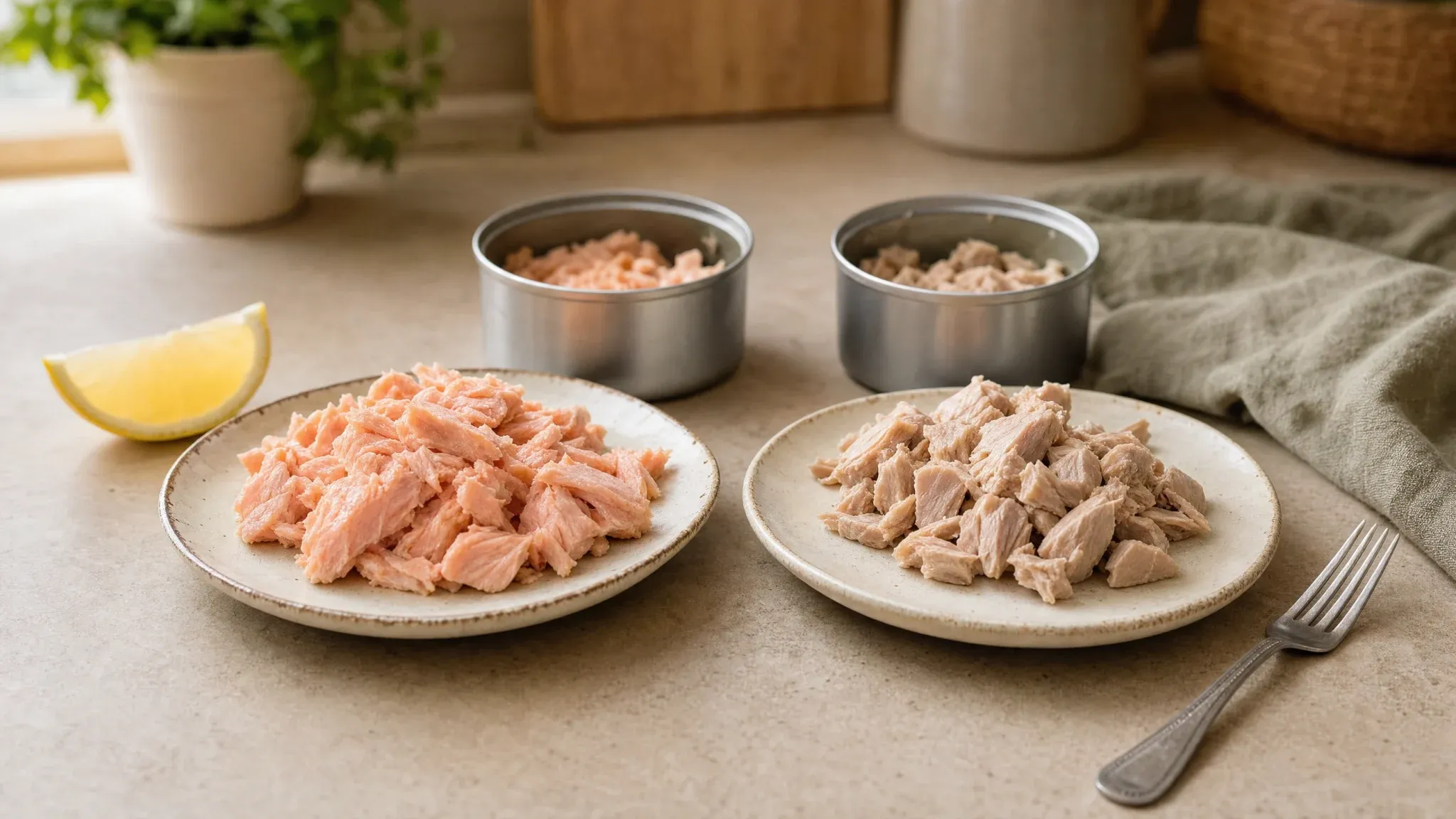
Start with the kind of fish
Canned salmon and tuna both supply protein. At the shelf, look for three things before you choose: the type of fish, the serving weight and the sodium on the Nutrition Facts panel. If you’re buying salmon, check whether the can says skinless and boneless. If you’re buying tuna, look for light, skipjack, albacore or another species name.
These details matter when two cans look about the same size. A can’s net weight includes the packing liquid. Two cans with the same net weight can yield different amounts of fish once drained. If you’ll use half a can in a sandwich, start by finding the label’s serving size, then work out how much of that serving you’ll eat.
Compare the same weight of drained fish
Here’s a worked example from two US manufacturer labels. Bumble Bee Skinless and Boneless Pink Salmon in Water lists 20 grams of protein and 250 milligrams of sodium for a 92-gram drained can. Bumble Bee Chunk Light Tuna in Water lists 23 grams of protein and 360 milligrams of sodium for its 113-gram drained-can serving.
At the same 85 grams of drained fish, about 3 ounces, those labels work out to:
Pink salmon: about 18 grams of protein, 231 milligrams of sodium and 2.3 grams of fat.
Chunk light tuna: about 17 grams of protein, 271 milligrams of sodium and 0.8 grams of fat.
To make the comparison, multiply each label value by 85 and divide by its serving weight in grams. The numbers are estimates because labels round their values. They describe these two products and package sizes. Check the can in your hand because a different size or recipe can have a different label.
In this example, the extra protein on the tuna’s whole-can label mainly reflects the larger drained serving. Both offer a similar amount of protein for an equal portion. If you want to compare several cans on the shelf, our guide to reading Nutrition Facts labels walks through the serving-size check.
Look at packing liquid and sodium separately
Fish packed in water can still contain salt or broth. Look at the milligrams of sodium for the amount you plan to eat. If a package says “reduced sodium,” the FDA’s sodium label guide explains that the claim compares the product with a regular version. Check the actual number before choosing it for an individual sodium plan.
Oil-packed fish may work well when you want some of the packing oil in a salad. Water-packed fish can suit a spread where you plan to add your own dressing. Look at the ingredient list for the oil, broth or flavoring. The Nutrition Facts label may describe drained fish, so the amount you eat can differ if you also use the liquid.
Decide whether you want the bones
Some canned salmon includes small, soft bones. The University of Missouri Extension explains that canning softens those bones, and NIH lists canned salmon with bones as a calcium source. You can mash soft bones into the fish with a fork if you like the texture. Boneless salmon is a practical option if you prefer a smoother spread.
If you follow a prescribed texture or swallowing plan, use the preparation it specifies. If you have a fish allergy, rely on your allergy plan and read the product’s ingredient and allergen statements each time you buy it.
Use the species to compare mercury
The FDA and EPA fish chart places salmon and canned light tuna, which includes skipjack, in its “Best Choices” category. Albacore, also called white tuna, and yellowfin are listed as “Good Choices.” Bigeye tuna is in the highest-mercury group. Those categories reflect average mercury differences by fish type. They do not measure the amount in a particular can.
The chart’s serving schedules are written for people who might become or are pregnant or breastfeeding and for children. Use the fish categories to see why the species matters. For a varied pantry, you might keep both canned salmon and canned light tuna on hand and choose by taste, texture and the label.
Put the can to work
Flake salmon over a baked potato or mix it with plain yogurt and dill for a spread. Try light tuna with white beans and a squeeze of lemon. If you already have a can of beans to use, see our guide to choosing canned or dried beans for a quick pantry comparison.
On your next shopping trip, check the fish type, drained serving and sodium on one can you already buy. Then compare one alternative. Keep the option you’ll enjoy and use.
Frequently asked questions
Check the can for its preparation and storage directions.
Is canned light tuna the same as albacore?
No. Light tuna can contain several species and often includes skipjack. White tuna is albacore. The FDA and EPA tuna questions explain that albacore generally contains more mercury than canned light tuna.
Is canned salmon already cooked?
Yes. Commercial canned salmon is fully cooked and ready to use from the can. Check whether you prefer to drain it and remove the skin or any visible bones before using it.
Can I swap canned salmon for light tuna?
Yes, in many salads or spreads. Canned salmon and light tuna both appear among the FDA’s lower-mercury fish choices. Check the drained amount, bones and salt before making the swap. Start with an equal amount of drained fish and season to taste.
How long does opened canned fish keep in the fridge?
The USDA’s guidance for opened canned fish is three to four days at 40°F or below. Refrigerate unused fish promptly in a covered container and follow any shorter instructions on the package.
Related reading.
Read · Food Facts
How to Read a Nutrition Facts Label: A Clear Guide After 60
Read serving size and % Daily Value, then compare two actual soup labels on the same basis.
Read article